
What's really feeding you? Soil health, nutrition & how to eat better
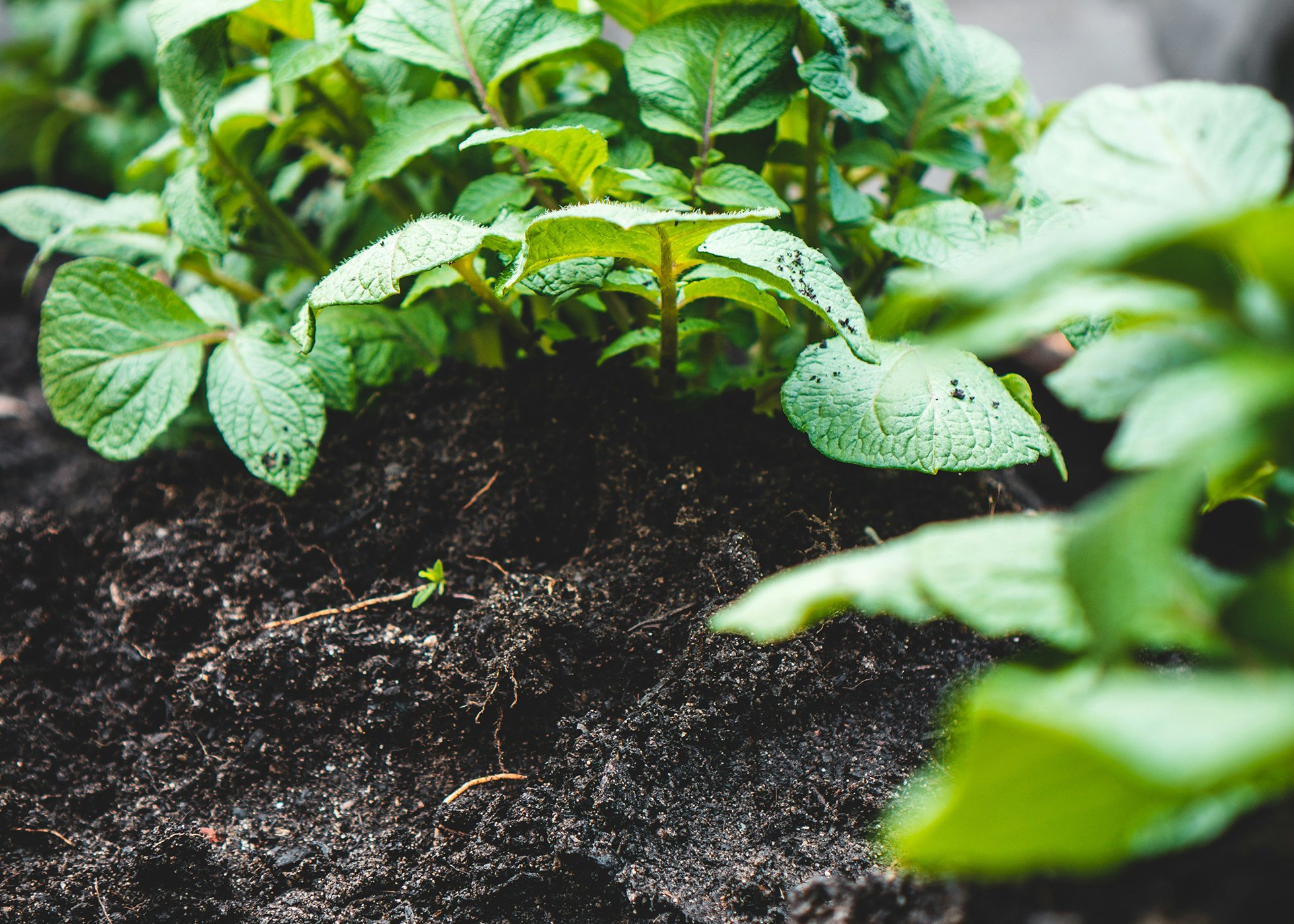
How the health of the soil your food grows in directly affects what ends up on your plate & what you can do about it.
99% of our food is grown in soil. Soil plays a critical role in making nutritious food & yet, not all soil is equal. Sure it might look like a brown earthy mess that’s something to avoid but if you want to eat well, you’ll want to understand its role in your diet & how to look out for nutritious food that comes from healthy soil. The ecosystem & even the climate are affected by soil so it plays a bigger part than just a way of putting food on your plate.
The living world beneath your feet & why soil health matters
You may have heard that we only have 60 harvests left before our soil is completely dead. That claim has been questioned but there’s no doubt intensive farming is damaging soil. Some estimates say that soil takes 1000 years to create, which means we’re killing it off long before we can generate new soil.
In the documentary Six Inches of Soil you get a chance to see what unhealthy soil is. It’s dry & hard. It smells putrid. Or if it’s really dead it’ll smell of nothing, like dry chalk. However with healthy soil, pick up a handful & you can see it’s packed with life. A huge amount of life. A teaspoon of healthy soil has 1 billion microorganisms & more than 1km of fungi. It’s crumbly & holds together.
The healthy soil allows rain to be absorbed deep into it, which means it can survive periods of drought while still keeping plants hydrated. But with unhealthy soil, because it’s hard packed, there’s nowhere for rain to go so the water stays on the surface, never getting absorbed into the soil. With nowhere to go it runs off & can’t be used effectively.
You are what your food eats
The message we’ve been given is that plants just need sunlight & water. The truth is that plants need plenty more than that. Think about humans. Yes we can get by on macronutrients like carbs, fat & protein. But to be healthy you also need a whole range of vitamins, minerals & micronutrients. Think about the role magnesium plays for muscles & nerves or vitamin A for seeing well. It’s the same with plants. They need to be able to grow in an environment rich in micronutrients to absorb what they need in order to grow healthily. When we eat plants starved of micronutrients we don’t get the micronutrients we need. A tomato with low micronutrient levels might look the same as nutrient dense food but it won’t be good for our health & gut.
Why your food is getting a bunch of chemicals instead of a proper meal
Ever since the Green Revolution we’ve been trying to squeeze as much life out of soil as possible. We farm intensively, harvest the crops & extract as much as we can. Big agriculture companies gave us the solution…add large amounts of fertiliser. The problem is fertiliser is like giving crops a can of Red Bull. It’ll make them grow rapidly but it doesn’t allow crops to develop naturally with a full range of nutrients & that’s before they get covered in a variety of chemicals like pesticides, growth regulators & desiccants.
Weapons & farming. What’s the difference?
Things really took off after WWII. The companies that made weapons, vehicles & chemicals had a huge amount of surplus capacity & saw an opportunity to convert that production into farm supplies. During WWI, DuPont was the largest gunpowder manufacturer in the US, supplying 40% of all explosives to the allies. Today, DuPont owns Pioneer Hi-Bred, one of the world's largest seed companies. Or Bayer, one of the world’s largest agrochemical companies has roots that trace back to IG Farben, the WWII chemical weapons producer.
It wasn’t only companies. In 1947, the US government switched from making explosives to making chemical fertiliser at their Muscle Shoals site in Alabama. The government realised the huge surplus of ammonium nitrate, the compound used to make bombs, also turned out to be good for making crops grow faster. Explosives became fertiliser. Nerve toxins became pesticides. Tanks became tractors.
We were told that unless farming was done intensively there’s never be enough food. But it's worth asking yourself if the chemical inputs were driven by supply or by demand. Because whether you like it or not companies that profited hugely from wartime are still the ones supplying what goes into growing your produce today. Make of that what you will.
Regenerative farming…exciting & totally unregulated
Regenerative farming’s a term you’ve probably heard used a lot. The concept is great. Minimal intervention with the soil to allow the mycorrhizal network to stay intact. Steer away from monoculture farming, mix up crops to help keep pests & disease away. It means soil stores more carbon, there’s no limit to how long the soil will last & the best part is it’s used to grow the most nutritionally rich produce so it’s better for you & produce will taste better. It’s truly a great way to farm. So far so good.
The problem is that regenerative farming is completely unregulated. Not only that, if you buy a product in the supermarket, like a loaf of bread claiming to be made from regeneratively farmed wheat, there’s no requirement for the brand to say how much of that wheat is regeneratively grown. It might contain 1% of regeneratively grown wheat while the other 99% is conventionally grown & that means with those chemicals the big agriculture companies are selling.
With such an unregulated industry you can see why big companies might be keen to jump on the marketing opportunity while offering very little to consumers. It’s a case of buyer beware. If you see the word regenerative, understand that it’s only as good as the farmer & the producer who makes it. As always, speak to who you’re buying your food from.
Your taste buds know more than you think
The question is, how do you know your produce is actually healthy for you? You could get it tested for nutrient levels at a lab but otherwise you'll never see what's really inside it. The good news is that your taste buds are all you need to get started.
In 100% natural produce, flavour is one of the best signals we have for nutrient density. It's why a tomato in Italy can taste incredible, not super sweet but complex & rich, while a tomato back home in the UK either tastes as sweet as a blueberry or tastes of nothing at all. The difference in flavour complexity is usually how we recognise nutrient density.
It doesn’t always work though because sugar, fat & salt all taste great & none of those are nutrient dense on their own. Food companies know this better than anyone, which is exactly how they engineer products to hit your bliss point, that perfect combination that makes you eat more without delivering anything your body actually needs. That's a manufactured high, not your palate telling you something's nutritious.
The other thing to watch out for is if you regularly eat food that isn't natural, your palate gets recalibrated to expect that same level of sweetness or intensity. You might think a Snickers tastes amazing but really it's hitting your bliss point, rather than telling you it’s nutritious. Spend a few weeks eating only natural, whole foods, then try that Snickers again. Most people would be shocked at how artificial it tastes. Once your palate resets, it can start telling you what's good for you to eat.
How to eat like you actually know what you're doing
All this comes down to keeping your eyes open. Make sure you’re aware of what you’re buying. The closer you can get to your produce, which means talking to the person who grew your products, the better.
Ask them questions like how it was grown, what chemical inputs they use, how long ago it was harvested, how has it been stored since then.
That conversation is your best way of finding out what's actually happened to the soil your food grew in. The most nutritionally rich food was picked when it was ripe & it’ll be the best tasting produce too.