
The Ferm: Turning London’s food waste into world class kimchi
From collecting cauliflower leaves by bus to working with patented Korean technology, Rebecca & Maylin are building a fermentation brand to change our view of what we eat & what we don’t.
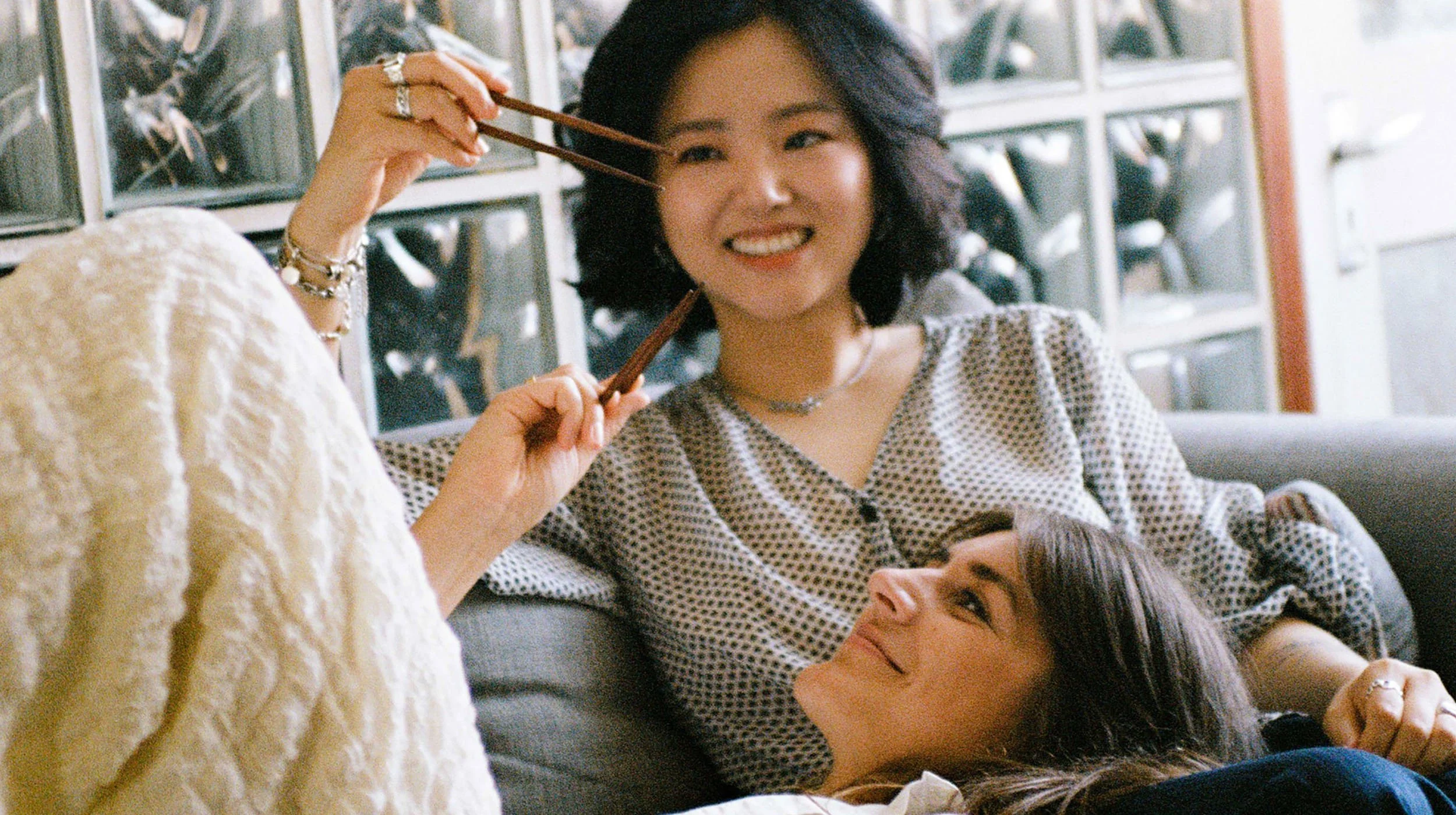
The Ferm’s co-founders Rebecca Ghim & Maylin Stanic
The Ferm currently focuses on making kimchi but what is kimchi? Co-founder Rebecca Ghim, explains the word comes from “dimchae”, dim meaning to submerge something in brine & chae comes from the word chaeso, meaning vegetables. It looks like simple lacto-fermented vegetables, just like you’d find with sauerkraut but over centuries the recipe has been shaped by geography, climate & handed down through generations of women, until it’s become something far more complex.
Rebecca grew up in Gwangju, South Korea, a place considered to be the spiritual home of kimchi. From a young age she took part in an activity called kimjang, which is the traditional communal practice of making kimchi. So when she came to London to study an MA in Design for Social Innovation & Sustainable Futures at LCC & found herself surrounded by massive amounts of vegetable offcuts which were perfectly good to eat yet being thrown away, she knew exactly what to do with them. Her mum had never wasted a scrap, which had shown what was possible.
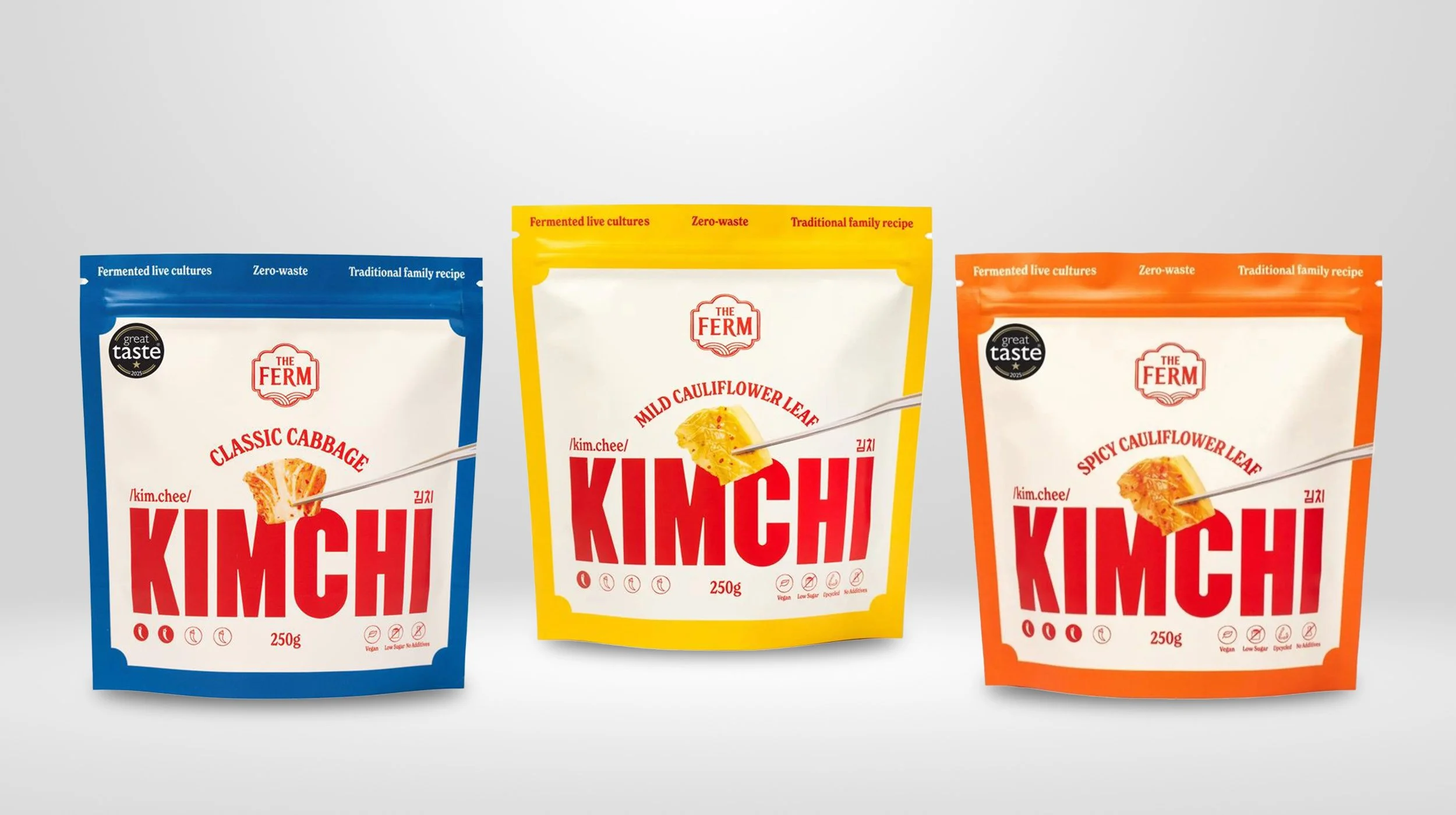
That led to Rebecca starting The Ferm in 2021. She started by making kimchi by hand, collecting cauliflower leaves from restaurants by bus & selling at farmers markets every weekend. It was like learning an MBA while building the business, with lessons in finance, marketing, production & logistics coming all at once.
The food waste ingredients The Ferm works with are perfectly good things like broccoli stalks, cauliflower leaves & beetroot tops. They are premium & fresh ingredients that kitchens throw out just because there’s no customer demand for them. Currently, The Ferm is able to source up to 400 kilos of vegetables per week. Until The Ferm came along, all that would’ve simply been thrown away.
In late 2024, Rebecca met Maylin Stanic & everything changed. Maylin brought almost a decade of business consulting & a PhD in leadership with her, along with a background as a competitive athlete & an interest in gut health & zero waste. Before they met, Maylin had been looking for an opportunity to do something with gut health, zero waste & plant-based food. Joining up with The Ferm worked out perfectly.
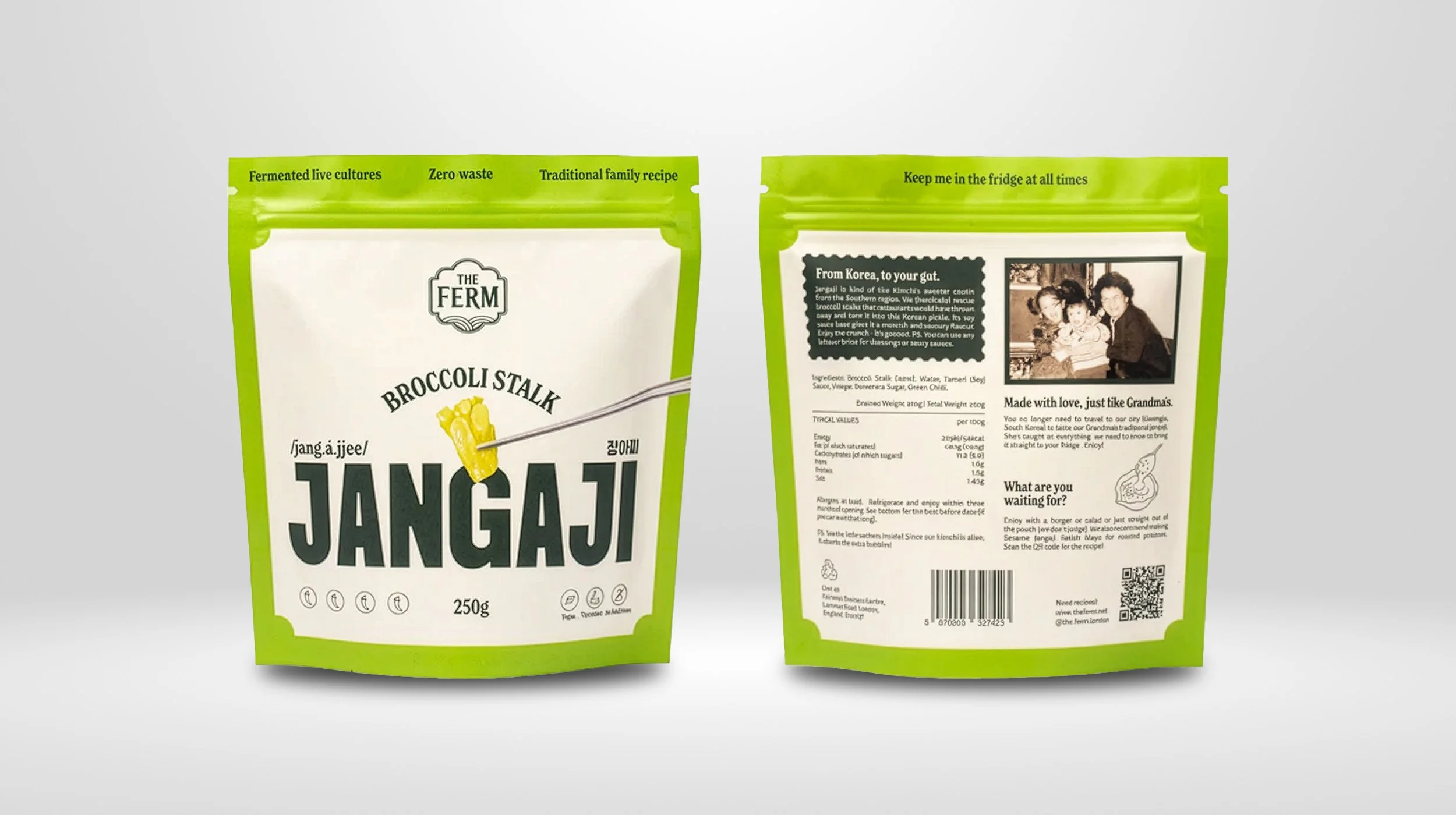
Since joining, they’ve moved from shipping in jars to pouches & with Maylin’s German heritage they’re looking at a wider range of products than just kimchi. Although zero-waste is massively important for The Ferm, their focus groups have shown that customers care most about taste & heritage, which is driving their next stage of development.
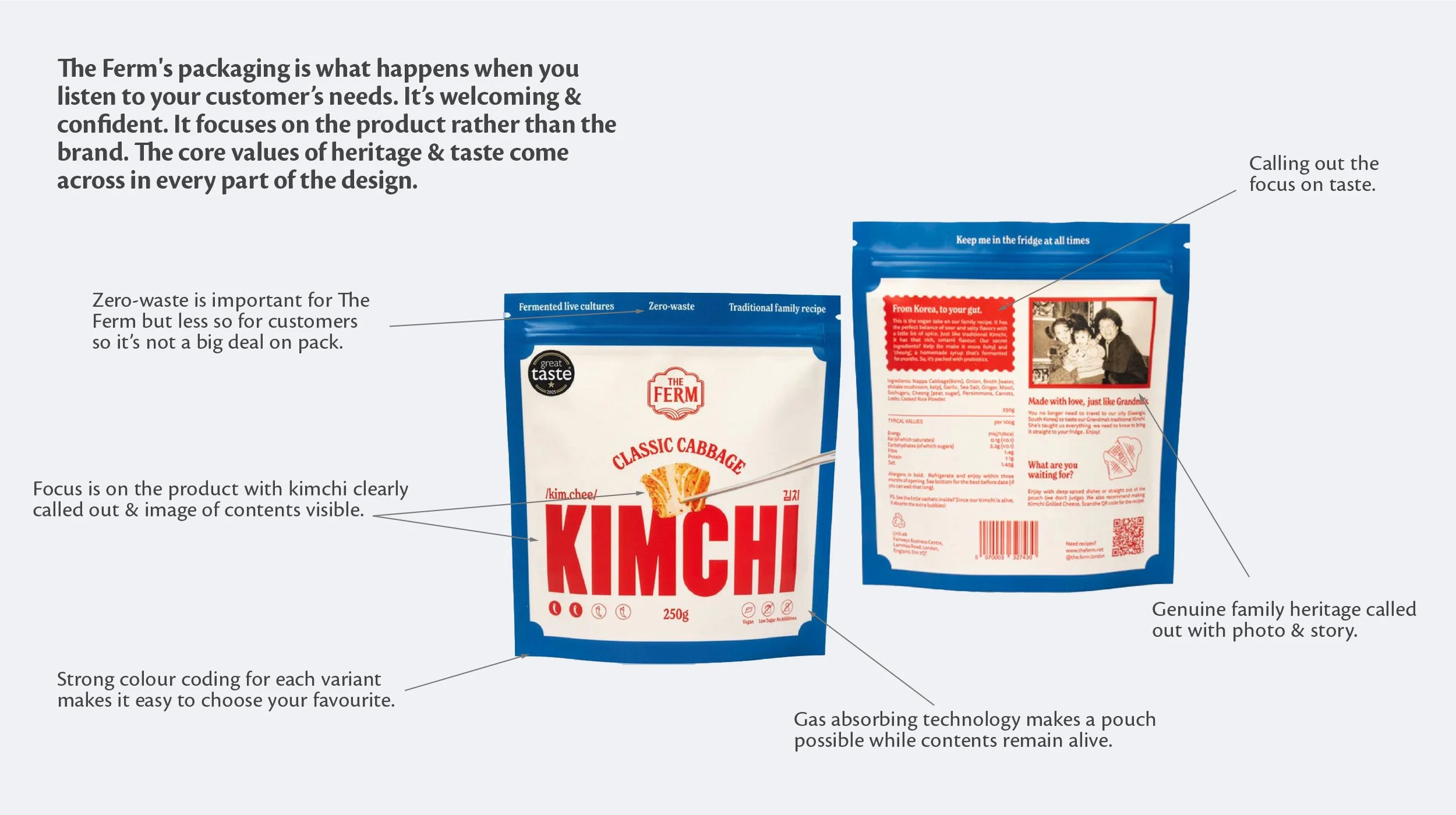
There are plenty of challenges though. Ferments like kimchi are alive. Every SKU has different microbial activity that depends on amounts of sugar, fibre & the types of ingredients used. They’ve sourced pouch materials that are inert from the high acid content of the ferments & they have to import gas absorbent sachets for each specific product. They’re in talks to become the UK distributor of a patented Korean technology that could allow live ferments to be sold at ambient temperature, which would be a game changer for the entire industry.
Their dream is to become Europe’s biggest fermentation brand. With hundreds of kilos of rescued vegetables a week, using pouches in a category of jars & a business culture built on a relentless work ethic, they’re well on their way.
Watch the full conversation on YouTube to hear Rebecca & Maylin get into:
- The real reason their kimchi costs as much as conventional brands, even though they use waste ingredients
- Why pasteurised kimchi & live kimchi are different products & how that impacts your gut
- The importance of running focus groups with people who had never tasted kimchi
- Why they switched to pouches when every other brand uses jars
- The “car crash” approach they use to structure their working relationship
- Their connection to Silo, London’s legendary zero-waste restaurant & what they’re up to now
- The patented Korean technology they are in talks to bring to the UK & why it could change the entire fermented food industry
LINKS:
Website - www.theferm.net
Instagram - @the.ferm.london