
The ingredient no one's putting on the label
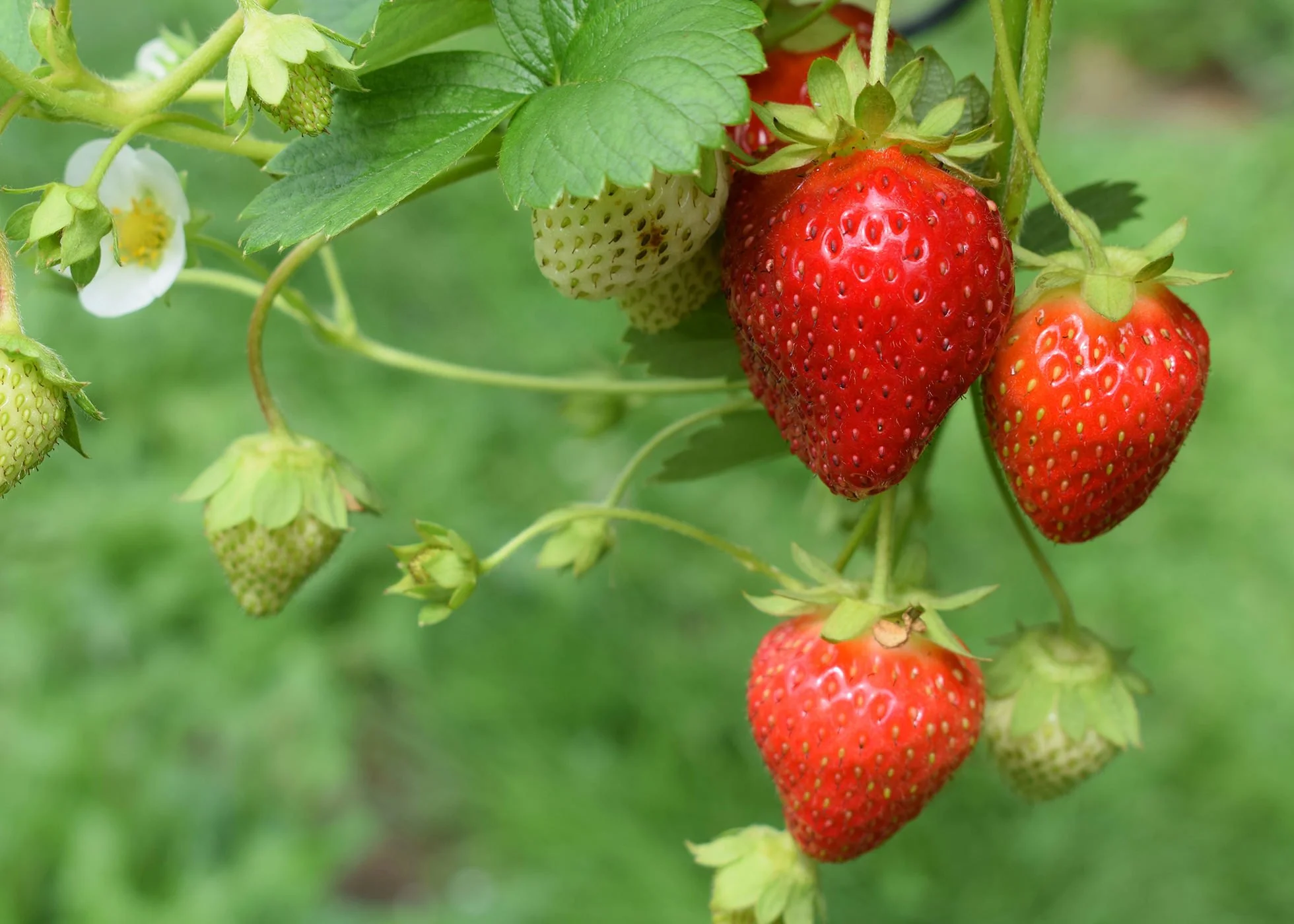
Imagine a warm morning in a Kent strawberry field…an aphid has just landed on a leaf.
The leaf was sprayed with a pesticide three days ago. The aphid can’t see this or smell it. In fact, to the aphid the chemical spray is invisible. It starts eating the leaf the same as it’s always done.
Except this time’s different. Within seconds, the aphid notices something wrong in its body. As soon as the aphid starts eating, the pesticide on the leaf starts working & stops the function of an enzyme called acetylcholinesterase. That enzyme is designed to turn off nerve signals once they’ve done their job. The only problem is that without the enzyme functioning, the nerves keep firing.
The aphid’s legs begin to twitch, gently at first, then violently & then overwhelmed by nerve activity they seize. Its whole body starts firing nerve signals & within minutes, it’s dead. All because its nervous system was completely overloaded.
This is what an organophosphate pesticide does & there are several different compounds that fall under the title of pesticide. Pesticides split into categories like insecticides, herbicides & fungicides with several others. They have one thing in common, which is that they’re all designed to work against the life that would normally interact with the plant.
Multiple sprays per season
Before the aphid landed on that strawberry leaf, the crop will have already been treated more than once & it won’t be the last time before the strawberries are picked & packed.
Most commercial strawberry farmers spray pesticide weekly through the season. Not just to keep aphids at bay but mould & other pests as well. A strawberry plant can be treated somewhere between half a dozen & several dozen times through a season, depending on the weather & pest activity.
Every pesticide that’s sprayed comes with a pre-harvest interval (PHI), which is the minimum number of days between the last spray & harvesting. The idea is that the PHI allows for pesticide residues to fall within the legal limit by the time you eat it. However it doesn’t mean there’s no residue, it just means that it’s fallen below an agreed level.
Pesticides hang around for a long time
One of the more commonly used chemicals on strawberries is called lambda-cyhalothrin, which is a pyrethroid type insecticide. It's highly toxic to bees, 1 teaspoon will kill 13 million bees. It's also a PFAS, these are compounds more commonly known as forever chemicals. They're called forever chemicals because they take 10-1000 years to breakdown. In 2022 alone, over 9,000 kilograms of lambda-cyhalothrin was applied across an area of land the size of eleven times Greater London. Most farmers using it don't even know it's a PFAS chemical, because there's no requirement to put anything on the label.
How common are pesticides on food?
So what happens by the time a strawberry gets to your plate? Pesticide Action Network found that out of 55 samples of UK strawberries grown in 2022, 91% contained at least one PFAS pesticide residue. That's almost every UK grown strawberry they tested.
Fancy a pesticide cocktail?
Although pesticide residues are monitored, no one looks at “pesticide cocktails”, which is when a food has two or more different residues on it. Safety limits are set for a single chemical, with no requirement to test combinations of chemicals. In those 2019 figures, Pesticide Action Network found 90% of strawberries had more than one pesticide residue. There’s no requirement to look at combination testing either for human health or environmental health.
According to the regulators, exposure from eating strawberries & other foods stays well below the threshold where harm would be expected. However, very little research has ever looked at combinations of chemicals, which makes it a bold claim from the regulators. Also no one’s ever looked at what happens when you’re eating combinations of pesticides for decades. A single meal could be feeding you dozens of pesticides & you’ve been eating several meals a day for decades.
What does your body think of this?
If you're thinking pesticides are only a problem for aphids, be aware of a 2022 study by Kings College London that looked at 65 pairs of twins & found that pesticides directly affect gut bacteria. The pesticides were found to alter gut chemistry including changes to lipids, short-chain fatty acids & inflammatory signalling. To make matters worse, in the follow up study pesticide chemicals were found in every urine sample with over half containing glyphosate, which is a known carcinogen to animals & a probable carcinogen for humans, although it's worth noting that not every regulatory body agrees on whether it is carcinogenic for humans at real-world exposure levels. There are no conclusions about health from this study, only that pesticides are linked to changes in the microbiome. Only time will tell what the real effects are.
How to avoid pesticides
1. Avoid produce on PAN’s Dirty Dozen list unless organic.
2. Do wash all produce but remember many pesticides are in the produce & are impossible to wash off.
3. If buying from a farmer’s market speak to your supplier & ask about how they treat their produce.